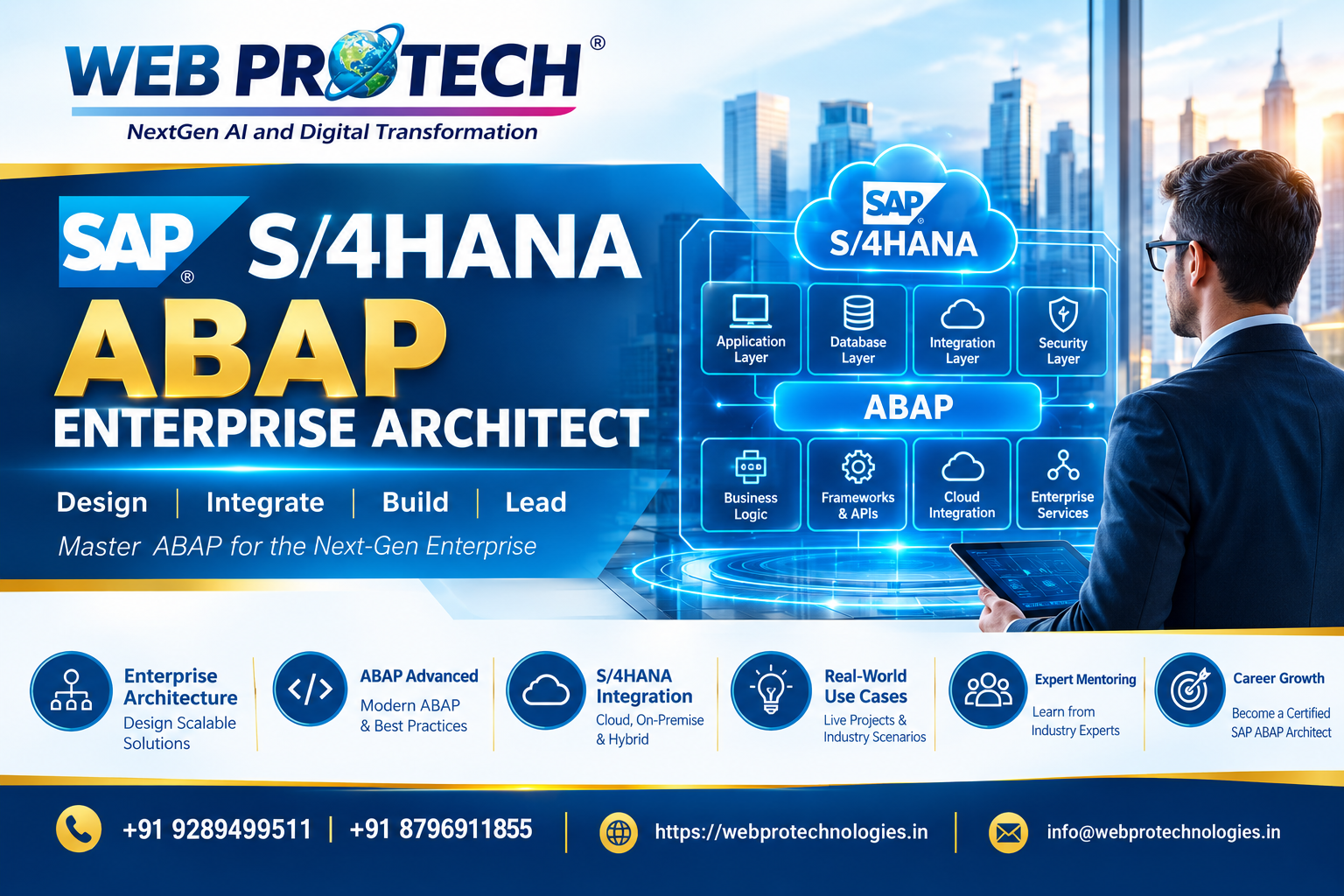
SAP S/4HANA ABAP ENTERPRISE ARCHITECT
SAP S/4HANA ABAP Enterprise Architect is an advanced architecture-focused program covering ABAP Cloud, RAP, SAP BTP, Clean Core, S/4HANA Cloud, RISE with SAP, Fiori/UI5, integration, and enterprise extensibility. It prepares experienced SAP professionals to design scalable, cloud-ready, secure, and clean-core enterprise solutions aligned with modern SAP transformation and architecture principles.
Course Description
SAP S/4HANA ABAP ENTERPRISE ARCHITECT
SAP S/4HANA ABAP Enterprise Architect is an advanced, architecture-focused training program designed for experienced SAP ABAP professionals, technical consultants, developers, solution architects, and professionals who want to progress from traditional ABAP development toward enterprise-level SAP architecture and modern SAP cloud development.
The program focuses on the evolution of SAP development from classical ABAP and ECC to SAP S/4HANA, SAP S/4HANA Cloud, RISE with SAP, ABAP Cloud, SAP BTP, RAP, Fiori, Clean Core, APIs, integration, extensibility, automation, and SAP Business AI.
Rather than concentrating only on coding, the program develops an architectural mindset—covering how enterprise SAP solutions are designed, extended, integrated, secured, migrated, governed, and prepared for long-term cloud adoption.
Core Architecture Focus
The training provides an end-to-end understanding of:
- SAP S/4HANA Architecture
- SAP S/4HANA Cloud & RISE with SAP
- ABAP Cloud & Cloud-Native Development
- ABAP RESTful Application Programming Model (RAP)
- SAP BTP Architecture & Services
- Clean Core & SAP Extensibility
- Side-by-Side and In-App Extensibility
- SAP Fiori & SAPUI5 Architecture
- OData, REST APIs & Enterprise APIs
- SAP Integration & Event-Driven Architecture
- SAP HANA & Code-to-Data Concepts
- SAP Data Migration & Transformation Architecture
- SAP Security & Identity Concepts
- SAP Business AI & Joule
- Enterprise Integration Patterns
- Application Lifecycle & DevOps
- Performance, Scalability & High Availability
- Enterprise Architecture & Solution Design
What You Will Learn
- Candidates should have basic understanding of: SAP ERP or SAP S/4HANA SAP Navigation Enterprise business processes Master Data concepts (Customer, Vendor, Material, Business Partner)
Course Curriculum
25 Sections- SAP
S/4HANA architecture and technology evolution
- SAP
ERP → SAP S/4HANA → SAP S/4HANA Cloud
- Public
Edition vs Private Edition vs On-Premise
- RISE
with SAP architecture
- ABAP
Platform architecture
- SAP
HANA-centric application architecture
- Application,
data and integration architecture
- SAP
cloud transformation architecture
- SAP
extensibility architecture
- Enterprise
architecture principles for SAP landscapes
- Architecture
decision framework
- Architecture
governance and technology standards
- SAP
S/4HANA Cloud architecture
- Public
Edition architecture
- Private
Edition architecture
- RISE
with SAP operating model
- Cloud
ERP transformation architecture
- SAP
Cloud ERP application landscape
- Fit-to-Standard
and clean-core principles
- SAP
Activate and implementation architecture
- System
landscape strategy
- Development,
test and production architecture
- Upgrade
and release strategy
- Cloud
lifecycle management
- SAP Business Technology Platform positioning
- Extension and integration strategy
- Evolution
from Classic ABAP to ABAP Cloud
- ABAP
for Cloud Development
- Cloud-optimized
ABAP
- Released
APIs and release contracts
- Public
SAP APIs
- Upgrade-stable
development
- Restricted
language principles
- Modern
ABAP syntax
- Inline
declarations
- Expressions
and constructor operators
- Table
expressions
- Functional
programming concepts
- Exception
handling
- Modern
object-oriented ABAP
- Clean
ABAP principles
- Testable
and maintainable application design
- ADT
architecture and workspace
- Eclipse-based
ABAP development
- ABAP
projects and system connectivity
- Packages
and software components
- Development
objects
- Source-code
based development
- Code
completion and navigation
- Static
code analysis
- ATC
integration
- Debugging
with ADT
- ABAP
Unit
- Transport
management
- Git-enabled development concepts
- Development lifecycle and governance
- CDS
architecture and design principles
- CDS
view entities
- Data
modeling with CDS
- Associations
- Composition
- Metadata
extensions
- Annotations
- Semantic
modeling
- Authorization
and access control
- CDS
analytical modeling
- CDS
for transactional applications
- CDS-based
integration
- Performance
considerations
- Reusable data models
- Enterprise data-model architecture
- SAP
HANA architecture for ABAP
- In-memory
computing concepts
- Code-to-data
principles
- HANA-optimized
ABAP
- SQL
and Open SQL
- CDS-based
data access
- Database
performance optimization
- SQL
Monitor
- SQL
Trace
- ST05
/ performance analysis
- Efficient
internal table processing
- Data
volume management
- Database-independent application design
- HANA-aware enterprise architecture
- RAP
architecture and design principles
- RAP
business objects
- CDS-based
data modeling
- Behavior
definitions
- Behavior
implementations
- Managed
vs unmanaged implementation
- Draft-enabled
applications
- Determinations
- Validations
- Actions
- Feature
control
- Authorization
control
- EML
– Entity Manipulation Language
- Messages
and transactional processing
- Numbering
- Side
effects
- Business
events
- Composition
and deep structures
- RAP
extensibility
- RAP
service consumption
- OData
V4 service exposure
- RAP
business object contract
- Managed
implementation architecture
- Unmanaged
implementation architecture
- Late
numbering
- Early
numbering
- Draft
architecture
- Determinations
and validations
- Actions
and functions
- Instance
feature control
- Authorization
architecture
- Locking
and concurrency
- Save
sequence
- Transactional
behavior
- Side
effects
- Business
events
- RAP
extensibility
- Reuse
and service architecture
- Unit
and integration testing
- Enterprise-grade
RAP architecture
- SAP
Fiori architecture
- Fiori
Elements
- SAPUI5
architecture overview
- OData
V2 vs OData V4
- RAP
service binding
- Service
definitions
- Service
exposure
- Metadata
and annotations
- List
Report
- Object
Page
- Analytical
applications
- Draft-enabled
Fiori applications
- UI
adaptation
- Fiori
launchpad architecture
- Role-based access
- Enterprise application UX architecture
- SAP
S/4HANA extensibility strategy
- Key-user
extensibility
- Developer
extensibility
- In-app
extensibility
- On-stack
extensibility
- Side-by-side
extensibility
- ABAP
Cloud extensions
- SAP
BTP extensions
- Extension
points
- Released
APIs
- Business
objects
- Events
- Custom
fields and logic
- Custom
business objects
- Extension
architecture decisions
- Upgrade-safe
extension strategy
- Clean
Core principles
- Why
Clean Core matters in SAP S/4HANA Cloud
- Clean
Core dimensions
- Clean
Core extensibility
- Custom-code
governance
- Modification-free
architecture
- Released
APIs
- Extension
points
- Side-by-side
extensions
- Developer
extensibility
- Integration
architecture
- Data
quality
- Process
design
- Technical
debt management
- Custom
code analysis
- ATC
and quality gates
- Clean Core maturity assessment
- Architecture governance
- SAP
Business Technology Platform architecture
- BTP
global account architecture
- Subaccounts
- Regions
and environments
- Cloud
Foundry architecture
- SAP
BTP ABAP Environment
- Application
Runtime
- Destination
Service
- Connectivity
- Identity
and Access Management
- SAP
Build Work Zone
- SAP
Build Process Automation
- Event-driven
architecture
- API-based
integration
- Extension
architecture
- Side-by-side development
- SAP S/4HANA + BTP architecture
- S/4HANA
to BTP connectivity
- Communication
systems
- Communication
arrangements
- Communication
users
- Destinations
- OAuth
2.0
- Trust
configuration
- Identity
propagation
- APIs
- OData
services
- REST
APIs
- SOAP
integration
- Business
events
- Event-driven
architecture
- SAP
Event Mesh concepts
- Integration
Suite architecture
- API Management
- Enterprise integration patterns
- SAP
Integration Suite overview
- Cloud
Integration
- API
Management
- Event
Mesh
- Open
Connectors
- Integration
architecture
- API-first
architecture
- REST-based
integration
- OData
integration
- SOAP
services
- Message
transformation
- Authentication
and authorization
- Monitoring
and error handling
- Integration
governance
- SAP-to-SAP
integration
- SAP-to-non-SAP
integration
- Hybrid
integration architecture
- Event-driven
architecture principles
- Business
events
- Domain
events
- Event
producers and consumers
- Event
Mesh architecture
- Asynchronous
integration
- Publish/subscribe
patterns
- Event-based
S/4HANA extensions
- Decoupled
application architecture
- Cloud-native
integration
- Resilience
and scalability
- Event
monitoring
- Error handling
- Enterprise event architecture
- SAP
Business AI strategy
- AI
in SAP S/4HANA
- Joule
architecture
- AI-assisted
business processes
- Generative
AI in SAP
- AI-assisted
development
- AI-enabled
enterprise applications
- Joule
capabilities and enterprise scenarios
- AI
agents and agentic workflows
- Business
context for AI
- SAP
BTP AI capabilities
- AI
integration architecture
- Enterprise
AI governance
- Responsible
AI principles
- Security
and authorization for AI
- Human-in-the-loop architecture
- AI-ready enterprise architecture
- AI-assisted
software development
- Generative
AI for ABAP developers
- Code
generation concepts
- Code
explanation and optimization
- Refactoring
- Documentation
generation
- Test-case
generation
- Debugging
assistance
- Clean
ABAP with AI assistance
- AI-assisted
CDS development
- AI-assisted
RAP development
- Developer
productivity
- AI
governance for enterprise development
- Human
validation and code-review controls
- SAP
authorization architecture
- Business
roles
- IAM
concepts
- Authentication
vs authorization
- Identity
providers
- SAP
Cloud Identity Services
- Single
Sign-On
- OAuth
2.0
- SAML
- Role
collections
- Communication
users
- API
security
- Secure
extension architecture
- RAP
authorization
- CDS
access control
- Data protection
- Enterprise security governance
- SAP
development lifecycle
- Development
→ Test → Production architecture
- Transport
management
- Software
components
- ATC
quality gates
- Automated
testing
- ABAP
Unit
- Integration
testing
- Continuous
Integration concepts
- Continuous
Delivery concepts
- Git-based
development
- SAP
Continuous Integration and Delivery
- Release
management
- Version
management
- Quality
gates
- Deployment governance
- DevSecOps principles
- Application
performance management
- ABAP
runtime analysis
- SQL
Monitor
- SQL
Trace
- ST12
/ ST05
- SAT
- ATC
performance checks
- CDS
performance
- Database
optimization
- OData
performance
- RAP
performance
- API
performance
- Integration
monitoring
- Memory
and workload analysis
- Scalability architecture
- Performance governance
- S/4HANA
data architecture
- Operational
data models
- CDS
analytical models
- Embedded
analytics
- Analytical
queries
- SAP
Analytics Cloud integration
- SAP
Datasphere architecture overview
- Enterprise
data architecture
- Master
data considerations
- Data
governance
- Real-time
analytics
- Operational
reporting
- Data
integration
- Semantic
data models
- AI-ready
enterprise data architecture
- SAP
Solution Architecture principles
- Business
architecture
- Application
architecture
- Data
architecture
- Integration
architecture
- Technology
architecture
- Security
architecture
- Cloud
architecture
- Extension
architecture
- API
architecture
- Event
architecture
- Application
lifecycle architecture
- Architecture
decision records
- Architecture
standards
- Reference architecture
- Solution blueprinting
- Enterprise
Architecture fundamentals
- Business
Architecture
- Information/Data
Architecture
- Application
Architecture
- Technology
Architecture
- Capability-based
architecture
- Target
architecture
- Current-state
assessment
- Future-state
architecture
- Architecture
principles
- Architecture
governance
- Technology
standards
- Architecture
roadmap
- Transformation
roadmap
- Architecture
trade-off analysis
- SAP reference architecture
- Enterprise Architecture governance
- ECC
→ S/4HANA transformation
- SAP
S/4HANA Cloud migration
- RISE
with SAP transformation
- System
conversion
- New
implementation
- Selective
data transition
- Extension
remediation
- Custom-code
analysis
- Clean
Core transformation
- Integration
modernization
- BTP
adoption strategy
- API
modernization
- Event-driven
modernization
- Legacy
retirement
- Technical debt reduction
- Transformation roadmap
ENTERPRISE ABAP CLOUD / RAP PROJECT
Design and implement an enterprise-grade SAP S/4HANA
extension covering:
Architecture
- SAP
S/4HANA Cloud
- ABAP
Cloud
- RAP
- CDS
- SAP
Fiori
- SAP
BTP
- APIs
- Business
Events
- Clean
Core
Development
- CDS
data model
- RAP
Business Object
- Behavior
Definition
- Behavior
Implementation
- Validations
- Determinations
- Actions
- Authorization
- Draft
- OData
V4
- Fiori
Elements
Integration
- S/4HANA
APIs
- BTP
Destination
- OAuth
- Business
Events
- Integration
architecture
Enterprise Architecture
- Solution
blueprint
- Application
architecture
- Data
architecture
- Integration
architecture
- Security
architecture
- Extension
architecture
- Deployment architecture
- Architecture governance
Frequently Asked Questions
Testimonials
"The SAP FICO training was clear and practical. Trainers explained real business cases that helped me gain confidence for interviews."

"The classes were interactive and easy to follow. Placement guidance helped me prepare a strong resume and crack interviews."

"Flexible batch timings allowed me to study while working. The practical sessions improved my understanding of accounting concepts."

"The trainers provided step-by-step explanations with real examples. Certification and career support gave me confidence to apply for jobs."

"Course structure was well organized and industry focused. Mock interviews and guidance sessions prepared me for real company roles."

"Learning experience was smooth and professional. Support team responded quickly and helped me throughout the training program."

"WebProtech gave me real industry skills with hands-on training. The projects helped me gain confidence."

"The teaching style is simple and clear. I was able to switch my career into IT easily."

"Best place to learn full stack development. Trainers focus on practical learning and doubt solving."

"I loved the structured course and real-time projects. It helped me understand concepts deeply."

"WebProtech helped me improve my coding skills. The DSA training was very useful for interviews."

"Support from mentors is great. They guide you at every step and help with placement preparation."

"Very good learning environment. The course content is updated and industry-focused."

"I joined as a beginner and now I can build full stack applications. Highly recommended institute."

"The best part is hands-on practice. You don’t just learn theory, you actually build projects."






Recent Placements

Rahul Verma
2022AWS Cloud Professional

Priya Sharma
2024Cybersecurity Specialist

Neha Gupta
2025AI & Data Science

Aman Khanna
2025Cybersecurity Specialist

Priya Sharma
2024AWS Cloud Professional

Rahul Verma
2022SAP Developer
Frequently Asked Questions
Have questions? We're here to help you understand our courses and services better.